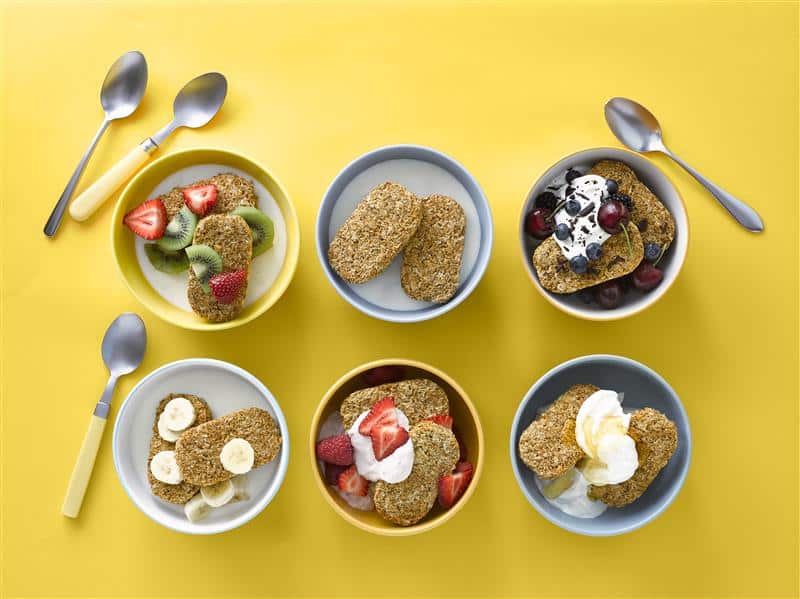
Starting your day with a high-fibre wholegrain cereal, such as Weetabix Original, is an easy way to support gut health as part of a balanced diet. Fibre plays a vital role in digestion and overall health, yet most people aren’t reaching the recommended UK adult daily intake of 30g.
Closing the Fibre Gap
Our research, which polled over 2,000 adults across the UK, shows a clear gap between awareness and action. While 81% of UK respondents recognise the importance of fibre, fewer than 1 in 10 (8%) could correctly identify the UK adult fibre recommendation of 30g fibre daily.
The good news? People are already taking steps to improve their fibre intake.
- Almost half (45%) have recently increased their fibre consumption
- Among younger adults (18–34), this rises to 69%
- Most people want to learn more, with 57% overall and 71% of younger millennials keen to boost their fibre intake
Weetabix Original can help bridge this gap as a convenient, wholegrain high-fibre cereal that provides 3.8g fibre per serving and fits easily into everyday routines, making it simple to start the day on a healthy note.
Fibre familiarity
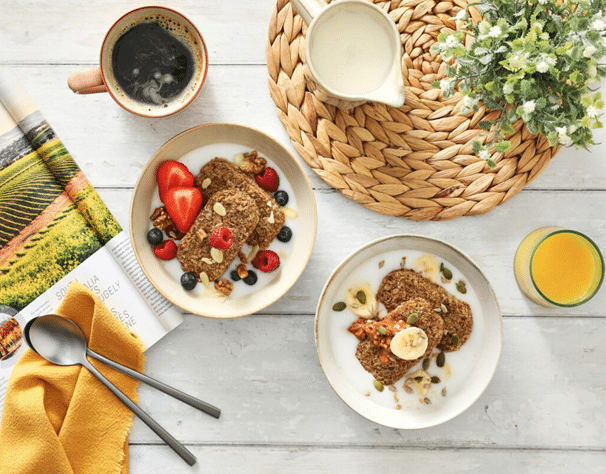
Fibre is an essential part of a healthy diet and gut health – and many people think they know how much they need. Almost half of respondents (49%) said they’re confident about daily fibre recommendations, rising to 64% among 25–34 year-olds.
But confidence doesn’t equal accuracy. The biggest gaps between perception and reality were seen among Gen Z and young millennials, who were also the most confident. On average, 18–24 year-olds estimated 20.5g per day and 25–34 year-olds 22.5g as the daily fibre guideline, both well below the recommended 30g for UK adults.
People across all cities and regions underestimated the UK’s daily fibre recommendation, with an average estimate of 22g, rather than the UK recommended 30g for adults. Uncertainty was highest in Brighton, where 46% said they were unsure.
Fans of fibre
But while the fibre knowledge gap is real, survey respondents were much clearer on the overall importance of fibre to a healthy diet and lifestyle.
More than four-fifths (81%) of respondents said they view fibre as an important part of their diet. This sentiment was highest among people aged 55+ (86%) and residents in Southampton (89%).
Why have you been including more fibre in your diet?
As our survey shows, there is strong public awareness around the benefits of fibre. In fact, the importance of gut health was a key theme among those we surveyed:
- 66% of people told us that ‘keeping your digestive system healthy’ is the main reason why fibre intake matters.
- This awareness increased with age – while 51% of Gen Z mentioned digestive system benefits, this rose to 77% among those 55 and older
- Almost one in two (49%) said ‘preventing constipation’ is a key benefit of eating fibre. Women were more likely to give this response than men – 52% versus 46%.
The biggest fibre barriers
While many of those surveyed are generally clued-up on the benefits of a fibre-rich diet, our busy lives mean we sometimes think it’s harder than it need be to get the fibre intake we need.
With household budgets under continued pressure, almost a fifth of respondents (18%), rising to 23% of young millennials, thought the cost of high-fibre foods could be a barrier. In reality, many everyday foods, like Weetabix, beans, lentils, and frozen vegetables, are affordable. The main challenge is knowing which foods are high in fibre: 35% of people cited a lack of knowledge, with men in particular reporting this more than women (39% vs 31%), despite feeling more confident about daily fibre recommendations (51% vs 46%).
This gap in understanding is echoed by nutrition experts, who say the issue is less about price and more about knowing what to put on the plate. Sian Porter, Consultant Dietitian to the Weetabix Food Company, explains:
“There’s a common misconception that eating more fibre means spending more on food but there are plenty of budget-friendly high fibre foods. Ignore the expensive ‘gut health’ products and think about a can of chickpeas for a curry versus meat, baked beans with a baked potato or frozen berries versus fresh. The barrier is often knowledge rather than cost – it’s knowing what to choose and how to build meals around theses cheaper and delicious high fibre foods.”
Grains of truth
There are lots of ways we can improve our gut health, but which fibre options are the most familiar?
What food categories do you believe are generally high in fibre?
| Food Category with Fibre | Yes, has fibre |
|---|---|
| Whole grain breakfast cereals (e.g. wheat biscuits, whole grain oats/porridge) | 58% |
| Whole wheat breads and pastas | 50% |
| Other whole grains (e.g. brown rice, quinoa, barley) | 43% |
| Vegetables (e.g. leafy greens, broccoli, carrots, corn) | 41% |
| Beans (e.g. black beans, kidney beans, cannellini beans) | 41% |
| Fruits (e.g. berries, apples, bananas, citrus fruits) | 38% |
| Chia seeds, flax seeds, and pumpkin seeds | 34% |
| Lentils and chickpeas | 33% |
| Almonds, walnuts, and peanuts | 32% |
| Refined grain products (e.g., white bread, white pasta) | 17% |
| Meat, poultry and fish | 16% |
| Milk, cheese and yoghurt | 15% |
| Eggs | 15% |
| Not sure | 7% |
| Other | 0% |
Our survey shows people mainly associate fibre with whole grains, oats, wholewheat, and brown rice (58%), and often overlook vegetables, beans, and fruits. 16% mistakenly thought meat, eggs, and dairy contain fibre, despite having none, which is concerning given the focus on high-protein diets.
That said, women were more likely than men to identify beans as high fibre (43% versus 38%). And awareness of high fibre breakfast cereals seems to increase with age – 34% of Gen Z compared with 73% of those ages 55+.
So in short: wholegrains are great! But alongside wholegrains, adding a variety of other high fibre foods can make it easy– and tasty – to reach our daily fibre goals. It’s knowing which foods they are.
Making fibre part of everyday life
There’s no time like the present, and many of those we polled are already looking to improve their fibre intake.
A clear majority (57%) said they’re keen to learn more about increasing the amount of fibre they eat. Among younger millennials, the figure was even higher – 71%.
What’s more, young people are branching out – 28% of Gen Z and young millennials say they’re getting their nutritional information from sources like social media. Equally, young millennials were the most likely to list healthcare professionals (35%) as a source of information.
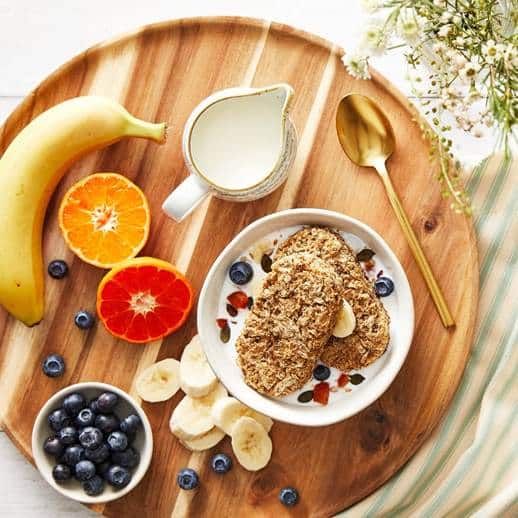
They say old habits die hard, but for many health-conscious respondents there’s no turning back!
Almost a half (45%) of all respondents have recently changed their diet to include more fibre, this was more prevalent with younger participants. 69% of those 18-34 have increased their fibre intake, compared to 26% of those aged over 55.
Glasgow was the city where people were most likely (49%) to say they’ve recently increased their fibre intake. It was also the city with the second highest percentage of people (63%) who said they’d like to learn more about increasing their fibre, behind only Nottingham (70%).
How to add more fibre to your diet
The easiest ways to increase fibre intake are by adding fibre boosters to your meal or snack and swapping ingredients for a higher fibre alternative.
Add
- Fruit, nuts and seeds to wholegrain breakfast cereal
- A sprinkle of nuts and seeds on top of wholegrain cereal, soup or yogurt
- Lentils, chickpeas or beans, to pasta sauces, curry and chilli
- An extra portion of vegetables or side salad to your meals
- Vegetable and fruit snacks such as veg sticks (carrots/peppers/celery/cucumber) and hummus or apple or pear slices and crunchy peanut butter
Swap
- White bread, rice and pasta for wholemeal or wholegrain options – wholemeal seeded bread, brown rice, wholewheat pasta
- Crisps for a handful of unsalted nuts
- Some or all white flour for wholegrain wheat or other higher fibre flour when baking e.g. buckwheat pancakes, but you may need to adjust the amount of fluid in the recipe
Do
- Keep some frozen vegetables and fruit in so you always have some. Just as good as fresh and cheaper too
- Leave the skin on vegetables and fruit if edible including potatoes
- At every meal and snack ask where are the veg? Eat at least five portions per day
- Add high fibre foods to your shopping list
- Increase your fibre intake gradually
- Keep your fluids up as you increase your fibre
The fibre future starts now
We’re proud that cereals like Weetabix Original can support gut health as part of a healthy diet and lifestyle. But our research suggests there is an opportunity to improve fibre knowledge, identify lower-cost high-fibre foods, and encourage more people to increase their intake — helping to close the fibre gap faster.
*Our findings are based on a nationally representative survey of over 2,000 UK adults, ensuring the results reflect the wider population.