What is the ideal cereal portion size?
Remember Goldilocks and the three bears? She was faced with a big bowl, medium sized bowl and small bowl of porridge. Goldilocks found it was the smallest one which was ‘just right’.
Often we are faced with our own Goldilocks situation at breakfast, not knowing how much cereal a portion is, what is the serving size for cereal, and what is ‘just right’ for us.
Why Portion Size Matters
The key to eating a balanced diet is variety, frequency, type and amount of food and drink.
Awareness of portion sizes is important to us all as it helps us to eat and drink what we need to look after our health and avoid eating too much or not enough of any type of food. Too big or too small a portion could mean your body may be getting too much or too little of what it needs to stay healthy. Excess calories from eating larger portions than we need can lead to weight gain.
As every person is different, portions for each food will vary according to age, sex, size, health and other factors such as appetite.
How Many Calories Should Breakfast Be?
For an average adult, breakfast should provide around 20% of your total energy (kcal) for the day. That’s around 400kcal for a woman eating 2000 kcal daily and 500kcal for a man eating 2500kcal daily.
According to the NHS Better Health Calorie counting – Better Health – NHS to lose weight women should aim for 280kcal at breakfast as part of their average daily total of 1400kcal, and men should aim for 380kcal at breakfast as part of their average daily total of 1900kcal daily.
The Weetabix Portion Advantage
If you’re confused about cereal portion sizes and suffer from portion distortion you are not alone. Which? research showed volunteers served themselves on average, 63% more cereal than the recommended portion size. Another 2025 survey from the same organisation revealed 31% of respondents said they guessed the portion size of loose cereal versus 22% who measured it.
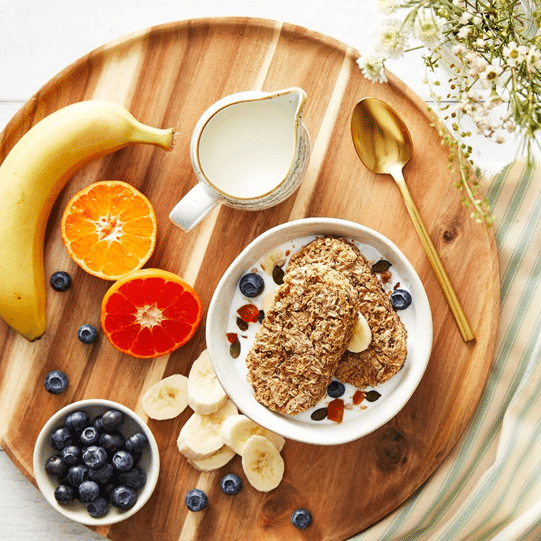
That’s where the Weetabix portion advantage comes in. Weetabix is a low-fat, low sugar, high-fibre cereal that makes portion control incredibly easy. With each bix being portion controlled there’s no guesswork. A serving is two Weetabix which comes in at 136kcal – well within recommended daily calorie intakes.
What About Milk & Toppings?
Adding 125ml semi-skimmed milk (a great benchmark if you’re wondering how much milk in cereal to use) to your two Weetabix which is the most popular way to eat it, takes the total to 199 kcal.
The total calorie count will depend on the topping but it’s not just about the calories. Adding sugar, honey, syrups adds calories with no other nutrients whereas adding fruit is a lower calorie way to sweeten your breakfast with the added benefits of vitamins, minerals and fibre.
Choosing lower fat dairy such as skimmed or lower fat yogurt still delivers on protein and calcium but saves on calories.
Nuts and nut butters are healthy toppings but again watch your portion size.
Conclusion
Being portion aware is an important part of a balanced, healthy diet and weight management. Weetabix is a healthy, and delicious portion-controlled breakfast option that takes away the guess work. Simple!
Frequently Asked Questions
How many grams of cereal should I eat?
As every person is different, portions for each food will vary according to age, sex, size, health and other factors such as appetite. Use the portion size on the nutrition label as a guideline and adjust it to suit your nutrition needs.
How many calories should I have for breakfast?
According to the NHS an average adult, breakfast should provide around 20% of your total energy (kcal) for the day. That’s around 400kcal for a woman eating 2000 kcal daily and 500kcal for a man eating 2500kcal daily.
According to NHS Better Health Calorie counting – Better Health – NHS to lose weight women should aim for 280kcal at breakfast as part of their average daily total of 1400kcal, and men should aim for 380kcal at breakfast as part of their average daily total of 1900kcal daily.
Is it okay to eat more than the recommended serving size?
As every person is different, portions for each food will vary according to age, sex, size, health and other factors such as appetite and weight loss. Children should be offered appropriate portion sizes for their age and size. Scientific research shows when presented with bigger portions of food, children and adults tend to eat more. To avoid overeating, start with a smaller portion. You should choose a portion size that fits in with your nutrition requirements including weight management. If eating a larger portion than recommended means you are eating more calories than you need then you should consider reducing your portion to help maintain a healthier weight.
What are some low-calorie alternatives to dairy?
When choosing plant-based alternative to dairy products it is best to choose those that are unsweetened with no added sugar. Look for those that are fortified too and remember that other nutrients in them such as the amount of saturated fat and the amount of protein are important considerations too.